
Understanding Lord Ganesha: Meaning, Symbolism, and Sacred Tradition
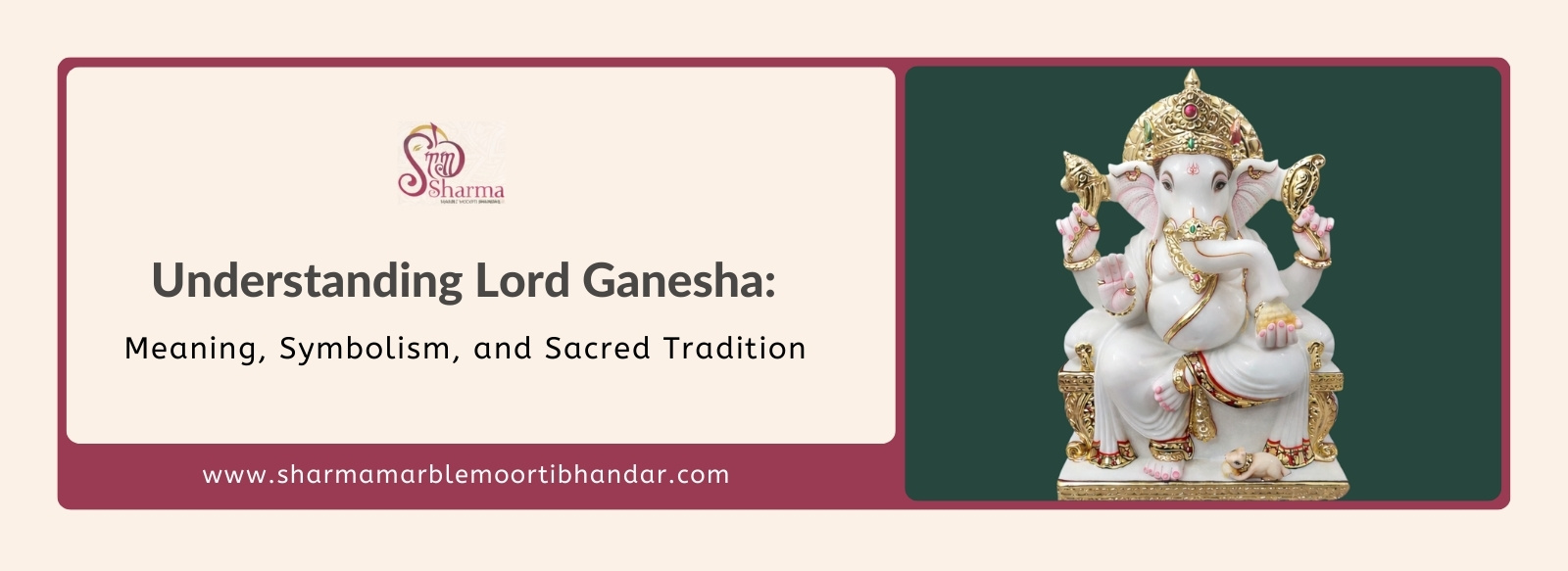
Among the most praised gods in Hinduism is Ganesha, who is seen as the remover of boundaries and the god of knowledge and a fresh start. He is adored and then proceeds with any good fortune before starting any kind of work, and he is symbolic of intellectual, prosperity, and protection. He is the son of Shiva and Parvati, and he symbolizes the unity of deities. His figure as an elephant with its head has rich spiritual meaning, as it is a lesson to be balanced, humble, and strong inside. His presence is manifested in all the houses and temples, and it can be understood as faith, tradition, and everlasting devotion.
Meaning and Significance of Ganesha
Ganesha is also called Lord of the Ganas or divine attendants. He is also referred to as vighnaharta (remover of obstacles), siddhivinayaka (bestower of success). The followers trust that his blessings make one clear-minded and one who experiences consistent development in life.
It is believed to be very good to have a Ganesha idol made out of marble to be placed in the home. It is also said to bring good fortune to the home and keep the home out of negativity. One of the most impressive pieces of architecture that adorns temples is a well-carved statue of Ganesh made of marble.
Makrana marble, which is strong, pure, and has a brilliant finish, is usually used by artisans to make statues of gods. The color of a white marble ganesha idol signifies the grace and enlightenment of the gods. These marble idols of the gods of spirituality are not only a piece of art but also a religious point of meditation and spiritual prayer.
The Elephant-Head: The Story Behind His Unique Form
Goddess Parvati had, according to sacred legend, created Ganesha to guard her chamber. On the return of Lord Shiva and his arrest by the little guard, the fierce conflict ensued, and the boy was beheaded. To comfort Parvati, Shiva brought him back to life with the head of an elephant.
The elephant head is a sign of intelligence, faithfulness, and great power. It is known that elephants make tracks in forests, which show the ability of Ganesha to eliminate the challenges in the path of life. His distinctive shape is the lesson of change, mercy, and the value of Godly grace.
Symbolic Philosophy of Lord Ganesha’s Form
All the elements of the Ganesha body are spiritual:
● Trunk - symbolizes flexibility and ease in managing life complexities.
● Big Ears - Teach to listen carefully and not to waste knowledge.
● Small Eyes - Promote attention and enhanced perception of more than meets the eye.
● Big Belly - The belly is a symbol of the balance in the acceptance of joys and sorrows in life.
● Mouse (Vahana) - Symbolizes the desires that should be controlled by wisdom.
● Marble Statue - A Lord Shiva family statue with Ganesha shows unity and equilibrium of divinity at the cosmic household. The gently rounded lines and serene look make it more spiritual.
Ganesha Mantra and Ganesha Gayatri
Ganesha mantras are said to cleanse the mind and eliminate negativity. This is a very potent mantra, which is used to get blessings to succeed and be safe.
Om Gan Ganapataye Namah
The Ganesha Gayatri Mantra. Concentration and inner peace can be achieved by regularly chanting in front of a marble ganesha idol for home.
Om Ekadantaya Vidmahe, Vakratundaya Dheemahi, Tanno Danti Prachodayat.
Ganesha Chaturthi and Ganesha Vrata
The festival of Ganesh Chaturthi is a festival of the birthday of lord Ganesha and is highly worshiped in India, and more so in Mumbai. The followers place the idols, sweets such as modak, devotional songs, and aarti, and then submerge the idol in water.
Ganesha Vrata is a fasting day, and special prayers are performed to get the blessings of prosperity and wisdom. Homes and temples happen to install exquisitely carved marble god idols during this period in the name of spirituality, god statues of makrana marble, the most divine marble, and their beauty is everlasting.
Important Things to Know About Lord Ganesha
The cult of Lord Ganesha is full of spiritual and cultural implications. His significance in my everyday life and religious tradition can be described as follows:
● First Deity of Worship - Each Hindu ceremony opens with a prayer to prosperity.
● Symbol of Wisdom - He controls wisdom, knowledge, and creativity.
● Broken Tusk Meaning - It is the symbol of sacrifice and commitment to proper duty.
● Favorite Offering Modak - symbolizes the sweetness of knowledge, spiritually.
● Ekadanta Significance - One tusk is an indicator of concentration on the truth and oneness.
● Guardian of Thresholds - Protects doorways of homes and temples.
● Related to Prosperity - Called upon in front of business enterprises and travels.
● Empowerment of Balance - Unites power, modesty, and care.
● Spiritual Placement - A marble Ganesh statue is usually placed in the northeast direction in order to achieve harmony.
● Family Representation - One of the statues of Lord Shiva's family signifies the unity and balance between the deity.
These are the reasons why followers prefer a marble Ganesha idol to place in the house, not just to be used as a decoration, but also to ground and receive Godly blessings.
Conclusion
Lord Ganesha is a symbol of wisdom, firmness, and good fortune. His elephant-shaped body bears the eternal spiritual teachings regarding flexibility, modesty, and intellectual power. Devotion to him is very traditional, and, beginning with prayers said every day, to the enormous celebrations such as Ganesh Chaturthi. Placing marble god idols for spirituality, and primarily a serene white marble Ganesha one, is a way of enhancing the spiritual feel of any space. Ganesha keeps bringing about balance, prosperity, and inner peace through faith and understanding.